

Introduction
Getting traffic to your Shopify store is only half the battle. If visitors are not converting into paying customers, your store is leaking revenue.
Many Shopify sellers focus heavily on design and marketing but overlook Conversion Rate Optimization (CRO). The result is high traffic and low sales.
This guide provides practical, proven strategies to increase Shopify conversions, reduce cart abandonment, and maximize revenue from your existing traffic.
Understanding Conversion Rate Optimization (CRO)
Conversion Rate Optimization is the process of improving your Shopify store to increase the percentage of visitors who complete a desired action, typically making a purchase.
Why Is CRO Important?
- Cost-Effective Growth: Increase revenue without increasing ad spend.
- Better User Experience: A seamless shopping journey builds trust.
- Competitive Advantage: An optimized store outperforms competitors in crowded markets.
Step-by-Step Shopify Conversion Optimization Strategies
1. Simplify Your Store Navigation
Clear navigation reduces friction and improves product discovery.
- Limit Main Menu Items: Keep primary categories between 5 and 7.
- Group Similar Products: Organize logical collections.
- Use Descriptive Labels: Replace vague menu titles with category-based labels.
- Add Predictive Search: Help customers find products faster, especially on mobile.
2. Optimize Product Pages for Higher Conversions
- High-Quality Images: Use professional, high-resolution images with zoom and multiple angles. Add lifestyle images when possible.
- Benefit-Focused Descriptions: Explain what problem the product solves, who it is for, and why it is better than alternatives.
- Clear Pricing and CTA: Make pricing visible and keep the Add to Cart button prominent and easy to tap.
- Reduce Decision Friction: Add size guides, FAQs, shipping times, and a short “what’s included” section.
3. Implement Trust Signals
Trust directly impacts buying decisions, especially for first-time buyers.
- Customer Reviews and Ratings: Display star ratings near product titles and show recent reviews.
- Secure Payment Icons: Show recognizable payment methods and SSL security.
- Transparent Policies: Make shipping, returns, and refunds easy to find and easy to understand.
- Contact Visibility: Add clear contact options (email, WhatsApp, live chat if available).
4. Streamline the Checkout Process
Checkout friction is one of the biggest causes of cart abandonment.
- Enable Guest Checkout: Do not force account creation.
- Minimize Form Fields: Only ask for essential information.
- Offer Multiple Payment Options: Credit/debit cards, PayPal, and Buy Now Pay Later (if relevant).
- Show Total Cost Early: Avoid surprises by showing shipping and taxes as early as possible.
- Optimize for Mobile: Ensure checkout is fast, responsive, and easy to use with one hand.
Measuring Your Shopify Conversion Success
Optimization should be tracked and tested. Use Shopify Analytics and Google Analytics to monitor:
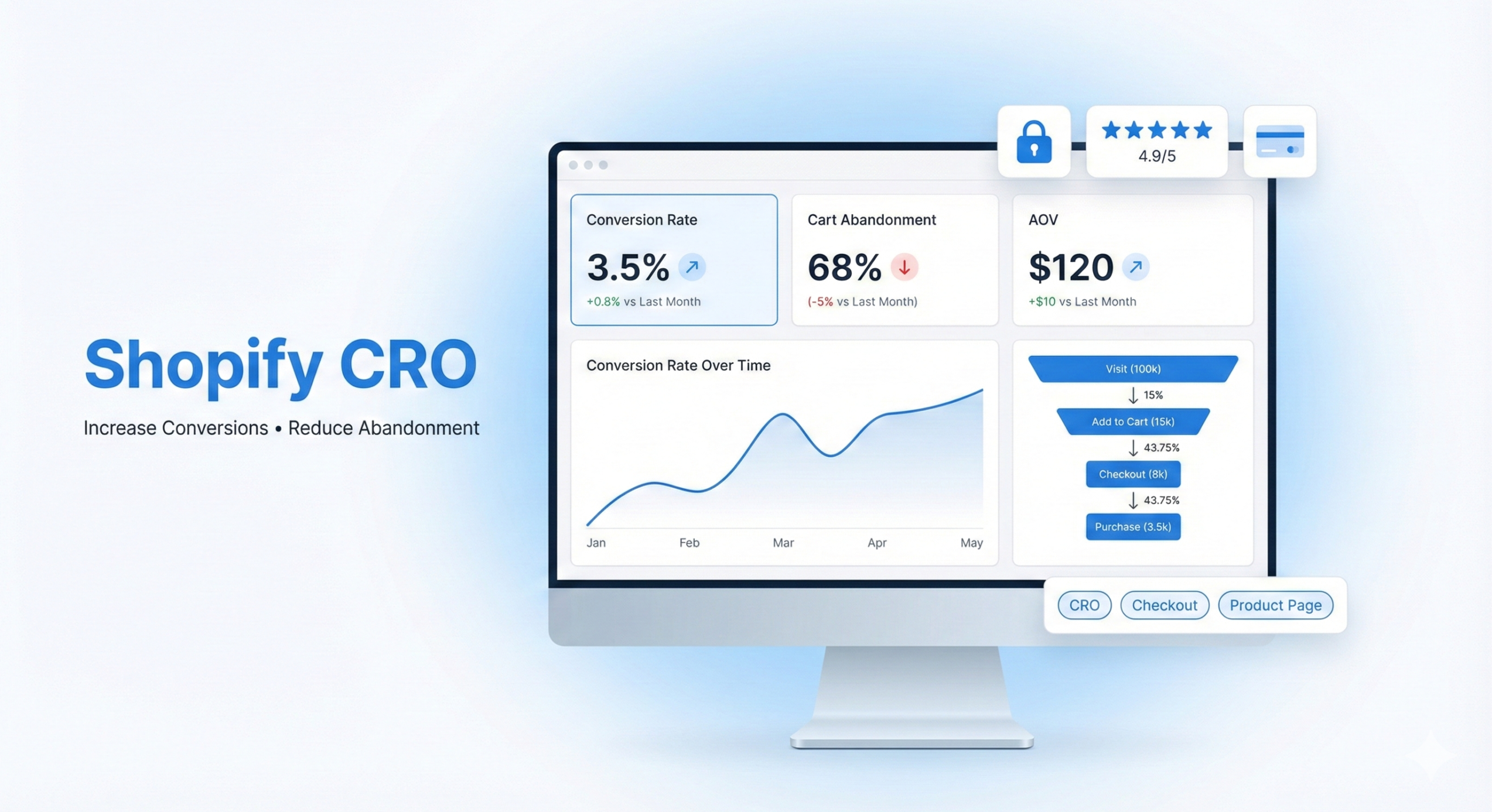
- Conversion Rate: Percentage of visitors who complete a purchase.
- Average Order Value (AOV): Average revenue per transaction.
- Cart Abandonment Rate: Percentage of shoppers who leave before completing checkout.
- Bounce Rate: Visitors who leave without interacting.
Conclusion
Shopify conversion optimization is an ongoing process of testing, refining, and improving. Even small improvements can create a meaningful increase in revenue.
If you want expert guidance tailored to your store, SMI Seller Solutions specializes in Shopify store optimization, CRO strategy, and revenue growth.
Free Shopify CRO Audit (20-Min Call)
Want clear, actionable feedback on what is lowering your conversions? Book a free 20-minute audit call and get a prioritized action plan covering product pages, trust signals, checkout friction, and speed improvements.
- Conversion blockers (navigation, mobile issues, speed)
- Product page improvements (images, copy, social proof)
- Trust signals and policy clarity
- Checkout friction and payment optimization
No pitch deck, no pressure. Just a clear plan you can implement.
Frequently Asked Questions
What is a good Shopify conversion rate?
Most Shopify stores convert between 1% and 3%. Well-optimized stores can reach 4% or higher depending on niche, traffic quality, and offer strength.
How can I increase Shopify sales without running ads?
Focus on improving product pages, strengthening trust signals, optimizing checkout flow, increasing site speed, and using upsells or bundles to raise AOV.
Why are visitors not buying from my Shopify store?
Common reasons include weak product messaging, missing trust signals, slow load times, unclear shipping or return policies, and checkout friction.
External Resources
